Simulating 5G SA/NSA Handover Latency for High-Density Fleet Management
SwiftRide optimized their fleet dispatch algorithm by emulating complex 5G network slicing and signal recapture logic in highly congested urban environments.
Overview
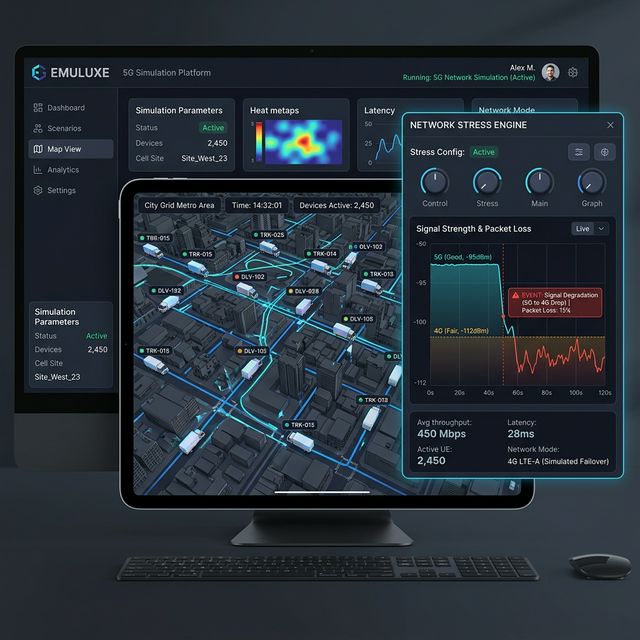
SwiftRide manages a fleet of 10,000 autonomous delivery vehicles across major metropolitan areas. Their dispatch system relies on sub-100ms latency to ensure vehicles receive real-time route updates. The technical bottleneck was the transition between different 5G network slices and the inevitable signal drops in urban canyons. They needed a repeatable environment to test how their app's websocket reconnect logic behaved when switching from a high-speed 5G Standalone network (SA) to a congested 4G anchor.
The Challenge
Real-world testing involved driving vehicles through specific city blocks, which was unrepeatable due to fluctuating carrier loads. SwiftRide's developers were often flying blind when a vehicle reported a connection drop, as they couldn't reproduce the exact signal-to-noise ratio or the specific packet-loss pattern that caused the socket to hang instead of reconnecting immediately.
The Emuluxe Solution
Using the Emuluxe Network Simulation API, SwiftRide's engineering team built 'Signal Profiles' for every major delivery route. They scripted precise network transitions: 5G Signal (Excellent) -> 4G Anchor (Congested) -> Tunnel (Total Drop) -> 5G Recapture. Emuluxe's ability to emulate specific ISP hardware meant they could even account for the different TCP window scaling behaviors of various regional carriers.
The Result
Through rigorous Emuluxe testing, SwiftRide identified a flaw in their exponential backoff algorithm that was causing a 'thundering herd' problem when 100+ vehicles exited a tunnel simultaneously. By optimizing the socket recapture logic in Emuluxe, they improved vehicle reconnect times by 85%. This directly translated to a 12% increase in overall fleet efficiency and eliminated the need for over 4,000 hours of expensive, non-deterministic field testing.
"The fidelity of Emuluxe's network stack is unparalleled. It's the only tool that allowed us to truly solve the 'Urban Canyon' connectivity problem without leaving our desks."
More case studies.
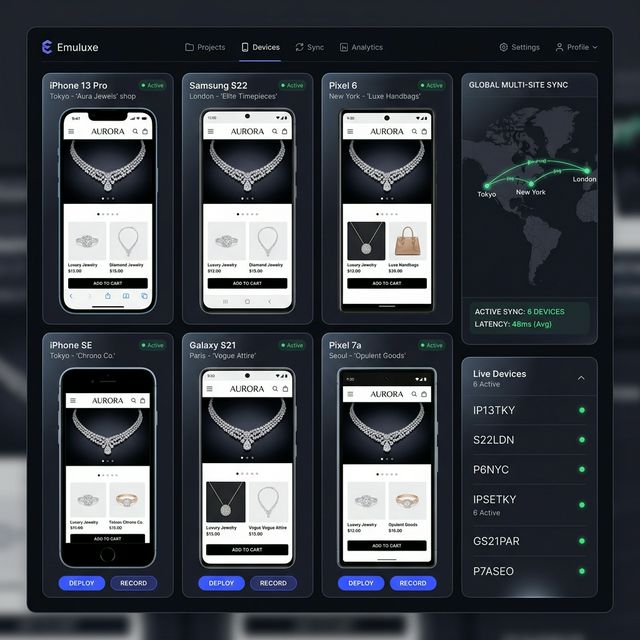
Orchestrating Regional Inventory Locks for 1,500+ E-commerce Storefronts
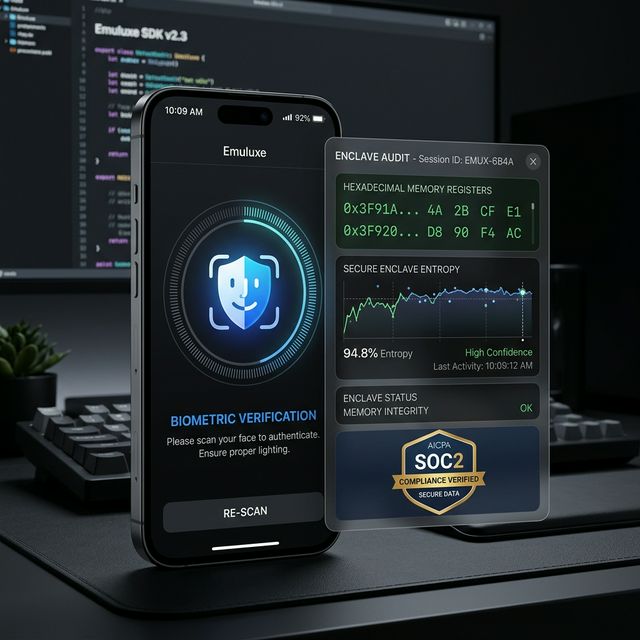
Auditing Hardware Enclave Integrity for Biometric WebAuthn Handshakes