Cutting Cross-Browser QA Cycles by 55% for a Global Virtual Events Platform
Hopin's engineering team used Emuluxe's parallel simulation engine to test real-time video synchronization across dozens of device profiles simultaneously, reducing their QA cycle from 3 days to under 32 hours.
Overview
Hopin is a virtual events platform that hosted over 100,000 events in its peak year, serving millions of concurrent attendees. Their core product relies on real-time WebRTC video streaming, interactive chat, and synchronized stage transitions. The engineering challenge was immense: ensuring that a keynote presentation looked and performed identically on an iPhone 15 Pro, a 5-year-old Samsung Galaxy S20, and a Chromebook—all connected via different ISPs with varying latency profiles. A visual glitch or audio desync during a high-profile corporate event could cost them an enterprise contract.
The Challenge
Hopin's QA process was entirely manual. Before every major platform update, a team of 12 QA engineers would spend 3 full days testing video quality, chat synchronization, and stage transitions across a physical device lab of 20 devices. This process was not only slow but also non-deterministic—a test that passed on Monday might fail on Wednesday due to a different ambient network load. Reproducing bugs reported by enterprise clients on specific devices was a nightmare, often requiring weeks of back-and-forth to isolate the issue.
The Emuluxe Solution
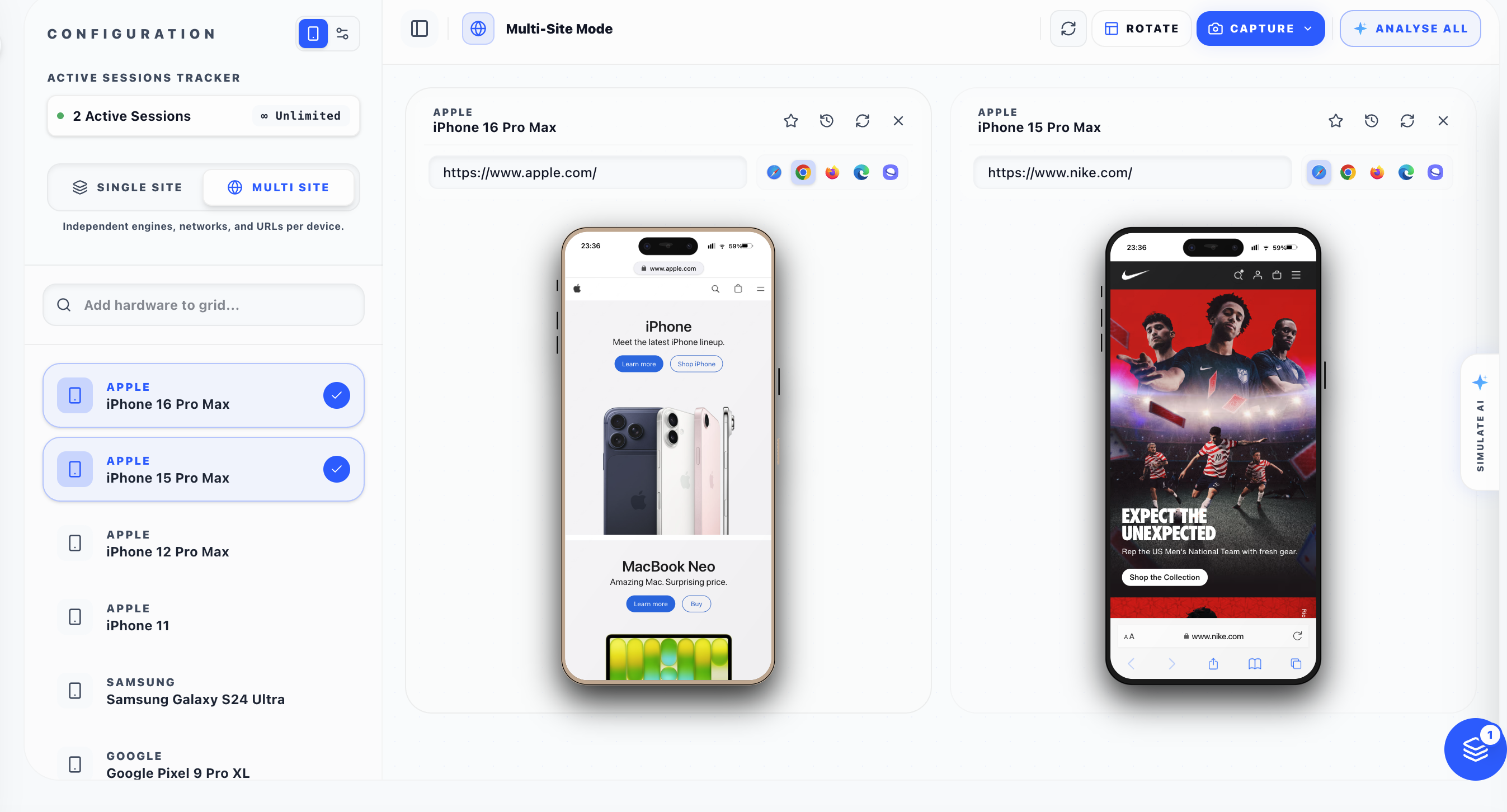
Hopin integrated Emuluxe's Multi-Site Sync API into their automated test suite. They built a 'Virtual Event Stress Test' that spun up 48 simultaneous device sessions—each with a unique hardware profile and network condition—and joined them into a single virtual event. The automation script monitored WebRTC stream health, measured audio/video synchronization deltas, and captured frame-by-frame screenshots for visual regression comparison. Emuluxe's ability to simulate different GPU renderers was critical for identifying rendering inconsistencies in their WebGL-powered virtual stage backgrounds.
The Result
Hopin's QA cycle dropped from 3 full days to under 32 hours—a 55% reduction. The automated Emuluxe test suite now catches 93% of device-specific bugs before they reach manual QA. A critical WebRTC memory leak that only manifested on Samsung devices with Exynos chipsets after 45 minutes of streaming was identified and patched within a single sprint. Enterprise client satisfaction scores improved by 22%, and the team reallocated 8 of their 12 manual QA engineers to feature development, accelerating their product roadmap by an estimated quarter.
"Virtual events require absolute real-time synchronization. Emuluxe's sync engine allowed our team to simultaneously interact with dozens of simulated device profiles, cutting our cross-browser QA cycles by more than half. It's the ultimate devtool."
More case studies.
Orchestrating Regional Inventory Locks for 1,500+ E-commerce Storefronts
Auditing Hardware Enclave Integrity for Biometric WebAuthn Handshakes