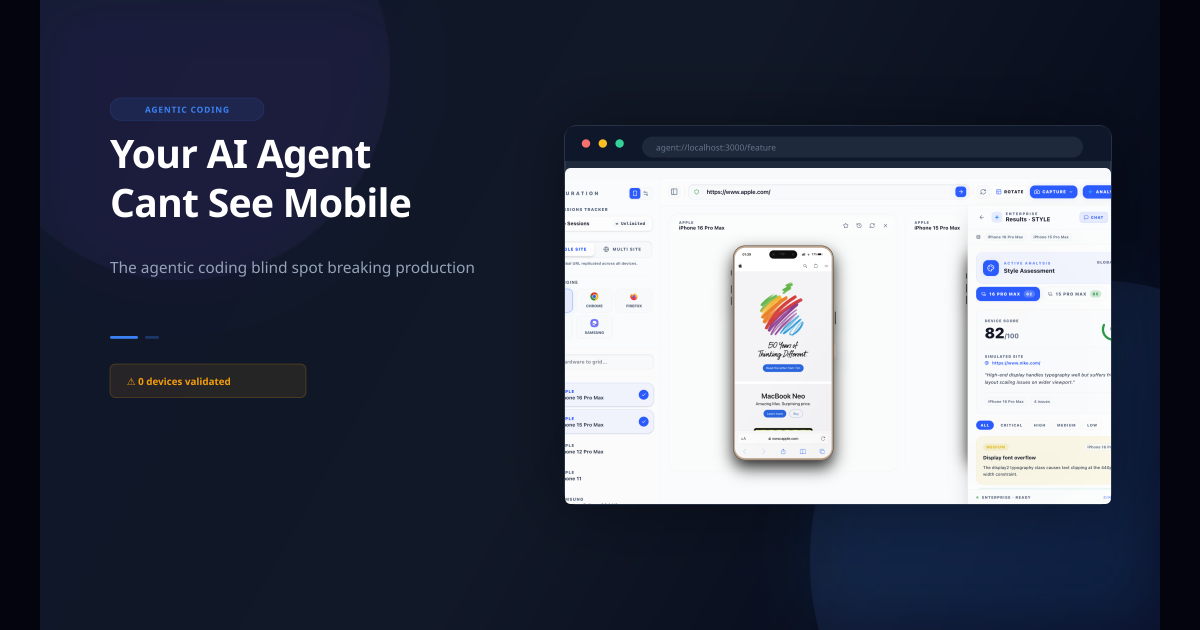
A lot of AI tooling talks about agents as if the only missing ingredient is autonomy.
For mobile UI work, that is not enough.
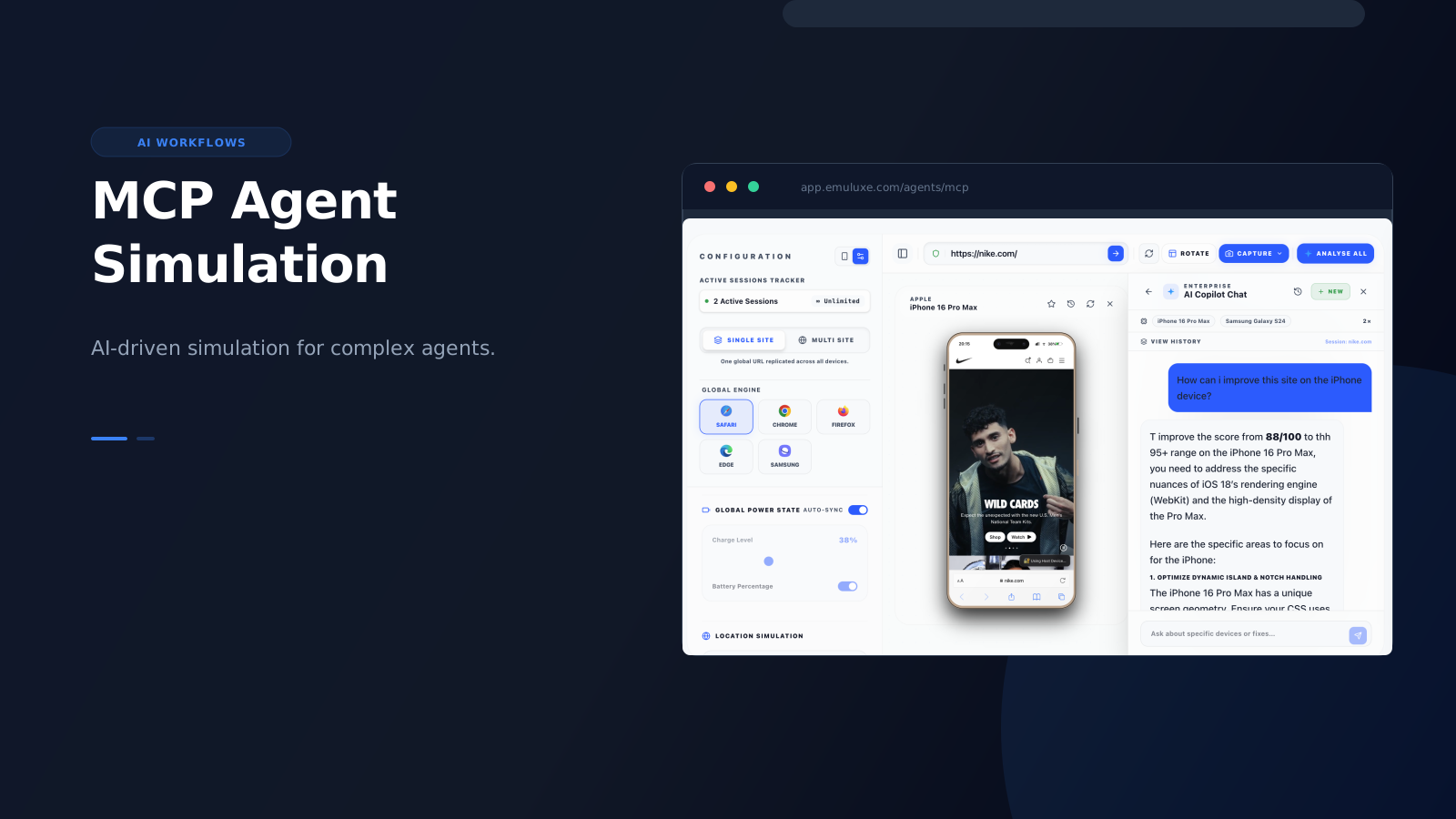
Agents need an environment they can inspect, reason about, and verify. Otherwise they are just making code suggestions in the dark. That is why Emuluxe MCP matters. It gives agents access to high-fidelity mobile simulation instead of forcing them to guess from code or screenshots alone.
Why MCP matters here
The Model Context Protocol is useful because it gives agent-enabled tools a standard way to discover and invoke capabilities.
For Emuluxe, that means an agent can:
- launch a simulation for any URL with a single command
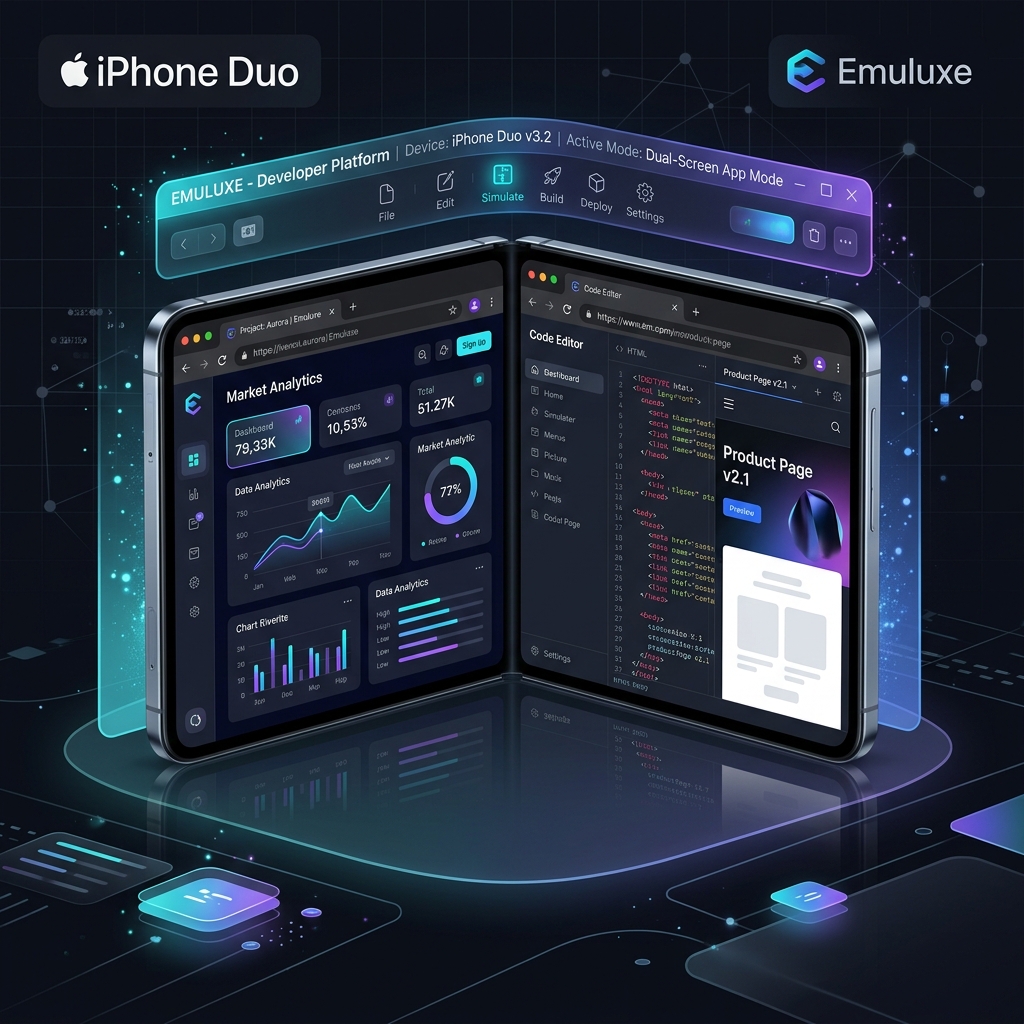
- choose from 100+ device profiles including iPhone 16 Pro, Pixel 8 Pro, and foldables
- inspect simulation state including safe areas, browser UI, and device-specific rendering
- gather context through screenshots and visual analysis
- verify a fix by rotating the device or switching to a different profile
- control network conditions (3G, 4G, 5G) to test performance under realistic constraints
The Emuluxe MCP server exposes specific tools that agents can use: list_devices to discover available hardware, simulate to launch high-fidelity simulations, rotate to change orientation, and screenshot to capture visual proof. Each tool is plan-aware, meaning it respects whether the user is on a Free or Pro plan and suggests appropriate alternatives.
That turns AI from a passive assistant into something closer to an operator working against a real mobile environment.
Simulation first, AI second
The strongest version of this workflow is still grounded in simulation first.
That is important.
If AI leads the story too hard, people start to imagine that the model is the product and the simulation is optional. For Emuluxe, the opposite is true. The simulation is the core truth layer. AI becomes powerful because it can act on that truth layer.